More Than Just Pop: The Script

“The beauty of their lives
Is when they’re dead and gone
The world still sings along
When anything went right
When anything went wrong
They put it in a song”

-Danny O’Donoghue

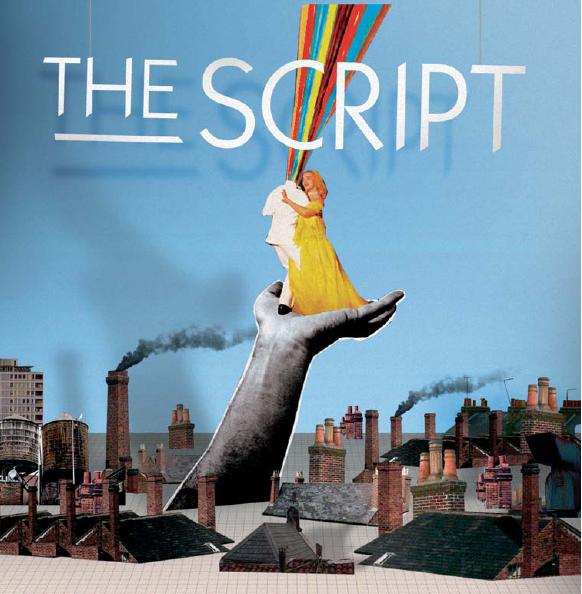
The Script is changing the script of pop music (excuse the pun). In their eponymous debut album, The Script, the Irish trio proves that they are much more than just another boy-band. Embedded in each and every one of their songs is a carefully scripted story written to resonate with an audience beyond just your run-of-the-mill pop-obsessed teenagers, touching on topics as basic as heartbreak, to as nuanced as the inequity in today’s social climate. This exquisite storytelling, combined with the group’s inventive sprinkling of rock and R&B influences in their songs, all polished to perfection, explains how the album The Script has won the test of time over this past decade.

While The Script was only propelled to stardom in 2008, the band’s lead vocalist Danny O’Donoghue and guitarist Mark Sheehan have a rich musical history together, and even knew each other since childhood. The two previously performed in an Irish-based group called Mytown, but failed to gain international acclaim and soon disbanded. Following this, the duo traveled to Los Angeles where they worked alongside producers and performers alike, before recruiting drummer Glen Power and, following a series of jamming sessions, founded their own band. The group’s first album, The Script, debuted shortly thereafter.
the script

The album opens with the single “We Cry,” a carefully crafted ballad with soaring vocals and ghostly coos, combined with a rock-esque taste added by the guitar, all on top of the background heartbeat of the drum kit. Interspersed between the smooth cries of the melody, O’Donoghue, in an almost spoken-word style, tells the hard-knock stories of a young mother, a drug-addicted musician, and an aspiring female politician. He breaks through the pop-music tide of hollow love-sick and bubbly lyrics, instead tackling heavier topics ranging from drug abuse, to sexism, to inequity, singing, “I’m sick of looking for those heroes in the sky to teach us how to fly.” The raw truth emanating from the lyrics in “We Cry,” juxtaposed with the smooth and polished notes of the music, packs a powerful punch for the Script’s opening track.

Before the Worst” returns us to the sounds of a more classic pop song, complete with a steady backbeat of drums and guitar, and an almost desperate banging of the keyboard. The intimate rawness of the lyrics, reflecting on “a time when we stayed up all night, best friends, yeah, talking til the daylight”  is perhaps what makes it such a universally understood and widely received piece. In an interview, Sheehan explained that fans would come up to him and tell stories about what this song means to them and how they relate to the lyrics, proving just how large the fanbase is that “Before the Worst” resonates with.

The following tracks likewise detail romantic pitfalls, providing stories that are simultaneously detailed and personalized, while also accessible enough for a wide audience to relate to the lyrics. Things are then shaken up with the song “Rusty Halo,” marked by a more rock-based beat. The fast-paced tempo of this track automatically induces a sort of anxiety in the listener, yet ironically, this song also introduces subtle religious overtones, suggesting a sort of upcoming final judgement day in the lyrics, for which O’Donoghue has to “Shine my rusty halo.” While not appealing to a specific narrative, this track touches more generally on the likewise universal idea of guilt.

Towards the end of the album, The Script briefly diverges from their classic storytelling style for a gag song, “If You See Kay” (spelling out F-U-C-K). The origin of this song actually directly involves the members of The Script and their audience alike, in which O’Donoghue posted the opening lyrics to “If You See Kay” online, and then let listeners comment on and tweak the song however they like from there.

The album ends with the softest ballad yet, “I’m Yours,” complete with the steady backbeat of an acoustic guitar, and soothing coos from O’Donoghue himself. Although a more standard sappy love song, this provides listeners with an opportunity to recuperate after unpacking emotional baggage from the earlier tracks. That’s not to say, though, that “I’m Yours” lacks musical value. The guitar bridge before the last refrain has an almost Spanish guitar-vibe to it, and the swells of the music throughout the track create a warm and relaxed feeling to the piece, a welcome change from the rougher rock-based earlier tracks. And of course, given that this song is so lovey-dovey, virtually anyone in a relationship can relate to the piece both on its surface level, and more deeply upon analysis of the lyrics.

Concertt

Although some critics claim that The Script is somehow too polished, these people are ironically overlooking the very thing that makes The Script’s first album so timeless: its attention to detail. More specifically, it’s attention to the intimate details of life, love, pain, and joy in the narratives of their songs. Ten years after its debut, The Script is still widely played on a variety of music stations and channels not because of the notes that the band wrote on the page, but instead as a result of everything the band created that goes beyond the written music, from their interactions with fans and listeners, to the ageless stories they tell with their songs. The Script’s uncanny ability to connect with each and every one of their audience members is thus what makes their first track rise above the level of  mere noise, instead being transformed into a powerful and timeless force in itself.
 

The Much Needed Resurrection of “An American Elegy”

“This will be our reply to violence: to make music more intensely, more beautifully, more devotedly than ever before.” — Leonard Bernstein

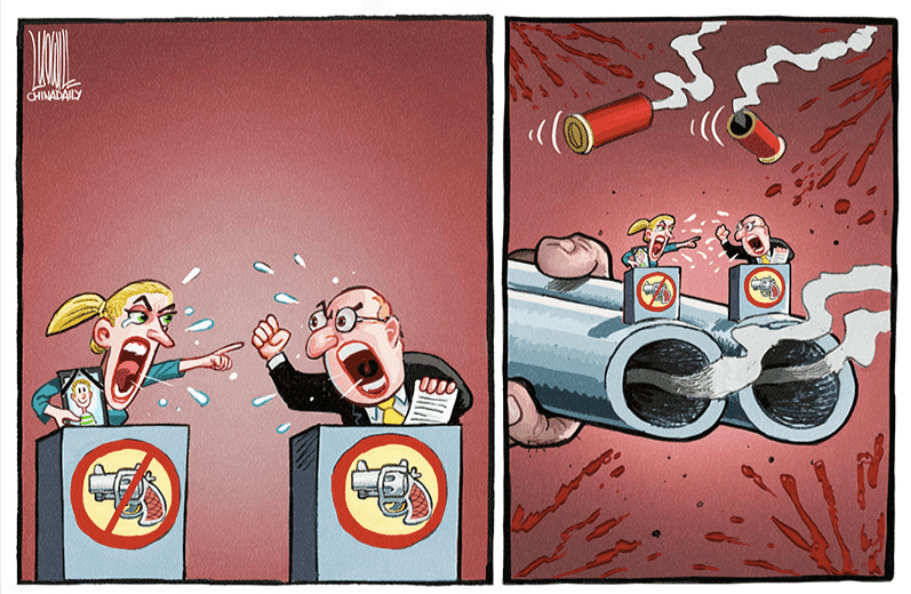
Since the Columbine shooting in 1999, over 215,000 students have been exposed to gun violence in their schools, inducing widespread outrage in America as the debate on gun control raises to a fever pitch. In this past year alone, a walkout was organized by students nationwide in response to the Parkland shooting, and Americans banned together through various social media hashtags, including “#MeNext,” to express their opinions on gun reform. On the opposite side of this argument, members of the NRA (National Rifle Organization) are becoming increasingly vocal both online and at rallies, and many argue that eliminating the right to bear arms would be counterproductive, further endangering unarmed Americans. With both sides of the gun control debate so impassioned, this issue is becoming increasingly polarized. Ironically, more attention is placed on being proven right than on creating change, and fear and outrage emanating from all sides of the debate has resulted in the stifling stalemate that we find ourselves in today.  This stagnancy, however, has one simple solution: hope. And that is exactly the message that Frank Ticheli communicates in his concert band piece entitled “An American Elegy.”

Screen Shot 2018-09-07 at 11.09.47 PM

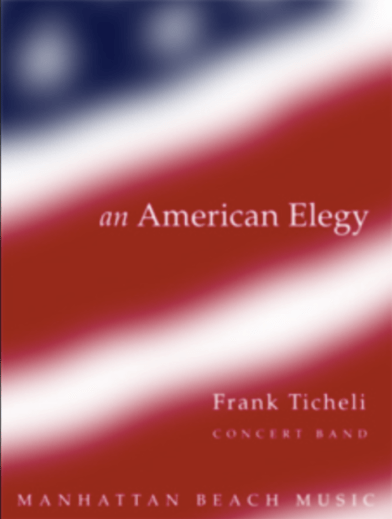
This piece was written in 2000 in response to the Columbine shooting, and in memory of the victims of the tragedy.  As he explains in the program notes, “An American Elegy” is, “above all, an expression of hope.” Instead of retaliating against the tragedy by attacking the government for lax gun laws, or calling for security guards in schools and for teachers to learn to wield a gun, Ticheli uses music to unite people, and inspire the hope necessary to induce change.

Ticheli was commissioned to write “An American Elegy” following the tragic Columbine shooting, and the piece debuted in a joint performance with students from Columbine High School Band, and the University of Colorado Wind Symphony. This initial performance already illustrates the uniting power of music, and how much more impactful creation is than debate. In fact, Ticheli was able to compose virtually every element of “An American Elegy” in a mere two weeks, spurred on by the gravity of his budding creation. If only politics could operate at that speed.

In terms of the music itself, “An American Elegy” begins with just barely a whisper of the lowest voices in the band. These deep voices continually rise in both pitch and volume, and upper voices soon join in with a countermelody, until it feels that the song explode apart from the sheer noise and energy emanating from the band. A bell toll finally marks the emergence of a new chorale, however, and the piece transitions from this force of uncapped energy into a more meditative main theme. Just as people tend to first react with stunned silence to a tragedy, before more and more voices cry out in outrage and despair, this piece likewise begins with a sort of melancholy feeling, before more and more instruments are added to the composition. Throughout this, however, the initial base line almost exclusively rises in pitch, perhaps representing a sort of hope among the chaos. The bell that marks the transition of the music into a more melodic chorale parallels a funeral bell that unites people in remembrance of the deceased, and the first main theme introduced shortly thereafter is one of the first instances in which virtually all members of the band are working to create one united and cohesive theme.

About halfway through the piece, the meditative and muted series of themes and intertwining lines gives way to a triumphant trumpet countermelody, indicating a renewed sense of purpose to the voices of the piece. Shortly thereafter, however, the listener is faced with a very simple and stripped-down tune between clarinets and saxophones that lacks even the basic melodic line, leaving only a bare harmony in remembrance of the tragedy. In addition to honoring those who passed in the horrific attack at Columbine, this quiet transition highlights the strength of those who endured the attack. Approximately seven minutes into the piece, Ticheli writes an exact quotation of the alma mater of Columbine High School, focusing the attention of the piece on the tragedy of Columbine.

“An American Elegy” concludes with an offstage trumpet solo, followed by one final swelling of noise from band, paralleling the very first crescendo of the piece and marking a last return of the main melody. The music then gradually fades out, leaving only the clarinets and the occasional bell toll exposed, until that too lifts into the silence. After hearing to “An American Elegy,” the listener is almost guaranteed to be reduced to a stunned silence, in awe of the piece’s “poetic strength.”

Screen Shot 2018-09-08 at 12.07.35 PM.png

Even though this piece was composed nearly 20 years ago, Ticheli just this year wrote a letter to the Los Angeles Times about “An American Elegy” and modern gun violence. When Ticheli composed the piece, he expected Columbine to be an outlier, a tragic anomaly. Instead, gun violence in schools has become a common occurrence, which Ticheli blames on current politicians who lack “a humility and wisdom.” Luckily, however, this bold arrogance can be remedied through something as simple as music.

Music, when truly listened to, has the power to impact us profoundly. It can bring about intense emotions, induce reminiscing, and, perhaps most importantly, inspire hope. In creating “An American Elegy,” Frank Ticheli helped to unite a mourning community of people, paying homage to the victims of the shooting while also pushing forwards to the hopeful future. Today, however, when people spend every waking hour arguing about who is right, the noise of our own voices blocks out the magic of the music. In the debate on gun violence, and more broadly in virtually every emotionally or politically charged argument, people often slip down the rabbit hole of debate, forgetting about the problem yet to be solved. So perhaps, rather than adding their own voices to the cacophony of debate, politicians and protestors should give up ten minutes of their time and listen to Ticheli’s “An American Elegy.” If nothing else, the listeners may finally feel hope.

Screen Shot 2018-09-08 at 12.07.08 PM.png