The Emo Scene—No mom, I’m not obsessed with the internet.

Being in middle school was weird. You were too old to be considered cute and innocent by adults, but too young to be given the respect and freedoms that come with adulthood. You were encouraged to express yourself and pursue your passions, but the unforgiving environment of middle school constantly tried to push you into the mold of conformity. Your body was beginning to change and grow with the progression of puberty, but—actually, lets not go there. Anyway, given how turbulent of a time middle school was, preteens from the early 2000s frequently turned to emo music, hoping to find some lyrics to express their inner angst. Of course though, with no money or means of transportation, teenagers began to explore the growing frontier that they were becoming increasingly familiar with: the internet.
live-dj-lesson-1.jpg

Emotional hardcore music, or “emo” for short, has a history that begins long before the internet became mainstream. This genre has roots in the United Kingdom with the loud and brash punk music from groups like Black Flag, The Dead Kennedys, and Hüsker Dü, before this music style extended across the pond to D.C. in the mid-80s and the hardcore punk scene was on the rise, led by groups including Rites of Spring and Embrace in the Revolution Summer of 1985.  Alt rock and indie groups in the Midwest then twisted this genre into something more cathartic and mainstream, and finally at the turn of the century, these bands began to adopt a pop-based sound and write more emotional, angst-filled lyrics, prompting the emo genre to take off.  In conjunction with this, the invention of social media platforms including Myspace and Facebook, and music streaming sites like Youtube, Pandora, Spotify, created conditions for the perfect online emo music storm.

The online emo music scene  allowed listeners to enjoy and rave about this genre from the comfort of their own homes, sometimes even interacting with the revered musicians themselves via social media platforms, prompting an entire online subculture to evolve from this music scene. A simple search of the term “emo” on Tumblr yields thousands of results, with blogs like The Aging Scene Kid and Washed Up Emo among the top results, and music streaming sites all offer a plethora of emo music playlists and albums. And even though the majority of fans were teenagers, spread throughout the world and interacting only through instant messenger, these listeners managed to adapt their own singular look, complete with thick eyeliner, skinny jeans, and black band tees. Remarkably too, this music scene paid little mind to the gender of listeners, perhaps because of the anonymity granted to internet users. This anonymity also allowed listeners portray themselves however they wish, and actually shape the very music scene that they were a part of.

As with many subcultures, the emo music scene died as it slipped into the mainstream. Most relics of emo music today are jabs at this overdramatic genre, including a spoof song of President Trump’s tweets as lyrics to an emo song and a plethora of “cringe compilations.” Nonetheless, this online scene was revolutionary in how it used the internet to connect people from all over the world, granting otherwise misunderstood teenagers a place to express their ideas and bond with one another over a shared love of music.


More Than Just Pop: The Script

“The beauty of their lives
Is when they’re dead and gone
The world still sings along
When anything went right
When anything went wrong
They put it in a song”

-Danny O’Donoghue

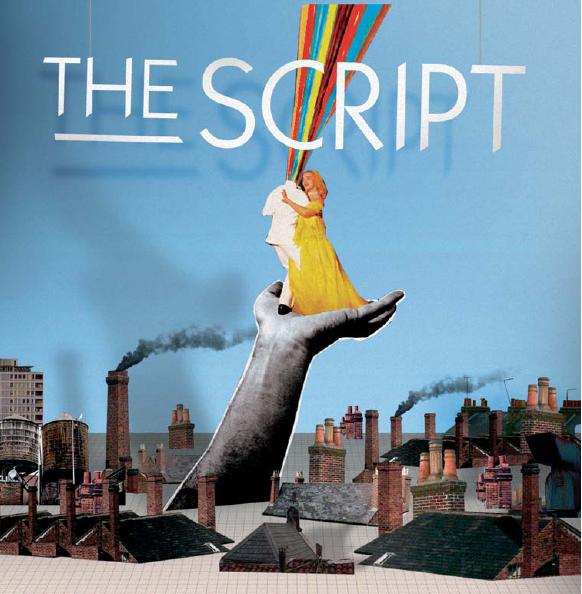
The Script is changing the script of pop music (excuse the pun). In their eponymous debut album, The Script, the Irish trio proves that they are much more than just another boy-band. Embedded in each and every one of their songs is a carefully scripted story written to resonate with an audience beyond just your run-of-the-mill pop-obsessed teenagers, touching on topics as basic as heartbreak, to as nuanced as the inequity in today’s social climate. This exquisite storytelling, combined with the group’s inventive sprinkling of rock and R&B influences in their songs, all polished to perfection, explains how the album The Script has won the test of time over this past decade.

While The Script was only propelled to stardom in 2008, the band’s lead vocalist Danny O’Donoghue and guitarist Mark Sheehan have a rich musical history together, and even knew each other since childhood. The two previously performed in an Irish-based group called Mytown, but failed to gain international acclaim and soon disbanded. Following this, the duo traveled to Los Angeles where they worked alongside producers and performers alike, before recruiting drummer Glen Power and, following a series of jamming sessions, founded their own band. The group’s first album, The Script, debuted shortly thereafter.

the script

The album opens with the single “We Cry,” a carefully crafted ballad with soaring vocals and ghostly coos, combined with a rock-esque taste added by the guitar, all on top of the background heartbeat of the drum kit. Interspersed between the smooth cries of the melody, O’Donoghue, in an almost spoken-word style, tells the hard-knock stories of a young mother, a drug-addicted musician, and an aspiring female politician. He breaks through the pop-music tide of hollow love-sick and bubbly lyrics, instead tackling heavier topics ranging from drug abuse, to sexism, to inequity, singing, “I’m sick of looking for those heroes in the sky to teach us how to fly.” The raw truth emanating from the lyrics in “We Cry,” juxtaposed with the smooth and polished notes of the music, packs a powerful punch for the Script’s opening track.

Before the Worst” returns us to the sounds of a more classic pop song, complete with a steady backbeat of drums and guitar, and an almost desperate banging of the keyboard. The intimate rawness of the lyrics, reflecting on “a time when we stayed up all night, best friends, yeah, talking til the daylight”  is perhaps what makes it such a universally understood and widely received piece. In an interview, Sheehan explained that fans would come up to him and tell stories about what this song means to them and how they relate to the lyrics, proving just how large the fanbase is that “Before the Worst” resonates with.

The following tracks likewise detail romantic pitfalls, providing stories that are simultaneously detailed and personalized, while also accessible enough for a wide audience to relate to the lyrics. Things are then shaken up with the song “Rusty Halo,” marked by a more rock-based beat. The fast-paced tempo of this track automatically induces a sort of anxiety in the listener, yet ironically, this song also introduces subtle religious overtones, suggesting a sort of upcoming final judgement day in the lyrics, for which O’Donoghue has to “Shine my rusty halo.” While not appealing to a specific narrative, this track touches more generally on the likewise universal idea of guilt.

Towards the end of the album, The Script briefly diverges from their classic storytelling style for a gag song, “If You See Kay” (spelling out F-U-C-K). The origin of this song actually directly involves the members of The Script and their audience alike, in which O’Donoghue posted the opening lyrics to “If You See Kay” online, and then let listeners comment on and tweak the song however they like from there.

The album ends with the softest ballad yet, “I’m Yours,” complete with the steady backbeat of an acoustic guitar, and soothing coos from O’Donoghue himself. Although a more standard sappy love song, this provides listeners with an opportunity to recuperate after unpacking emotional baggage from the earlier tracks. That’s not to say, though, that “I’m Yours” lacks musical value. The guitar bridge before the last refrain has an almost Spanish guitar-vibe to it, and the swells of the music throughout the track create a warm and relaxed feeling to the piece, a welcome change from the rougher rock-based earlier tracks. And of course, given that this song is so lovey-dovey, virtually anyone in a relationship can relate to the piece both on its surface level, and more deeply upon analysis of the lyrics.

Concertt

Although some critics claim that The Script is somehow too polished, these people are ironically overlooking the very thing that makes The Script’s first album so timeless: its attention to detail. More specifically, it’s attention to the intimate details of life, love, pain, and joy in the narratives of their songs. Ten years after its debut, The Script is still widely played on a variety of music stations and channels not because of the notes that the band wrote on the page, but instead as a result of everything the band created that goes beyond the written music, from their interactions with fans and listeners, to the ageless stories they tell with their songs. The Script’s uncanny ability to connect with each and every one of their audience members is thus what makes their first track rise above the level of  mere noise, instead being transformed into a powerful and timeless force in itself.