Why “NO” isn’t good enough

2016 was supposed to be the year of the woman. Former Secretary of State Hilary Clinton stood as the first female presidential nominee of a major party, Beyoncé released the album Lemonade, a powerful ode to black women, and the Nasty Woman movement took off, empowering females all across America to speak out against age-old oppressions. It appeared as though things were finally looking up in terms of gender equality, and Americans everywhere anticipated what seemed to be the inevitable victory of Clinton over Republican candidate and oompa loompa entrepreneur Donald Trump, prompting journalists to even write up draft articles of Clinton’s future presidency on the eve of election day. Unfortunately though, things did not go exactly as planned.

The same can be said about Meghan Trainor’s hit song “NO,” released in that same year.

Related image

Don’t get me wrong, Trainor’s song certainly has its merits. In a musical climate rampant with sexism where women always “want it,”  there is nothing more refreshing than a hard and fast “NO.” The song is chock full of lyrical gems, calling out the objectification of women, encouraging females to take back their own bodies, and challenging the assumption that every female needs a male counterpart, all while encouraging women to just say no to unwanted advances. Trainor undoubtedly was swept up in the feminist rush of 2016 in composing this song, loudly championing female autonomy and empowerment through both the song itself, and the sensual music video. In spite of her song becoming a “go-to for women who need to brush off scrubs in the club,” though, Trainor has virtually no experience with unwanted nightlife advances. She actually wrote the song in a fit of anger at producer Ricky Reed, after he told the artist that her new album lacked a single. Perhaps because of this, Trainor could so nonchalantly write a song encouraging women to say the very same thing that results in their harassment, abuse, and murder.

Women face numerous societal pressures to be polite and kind, an issue that is aptly addressed in Trainor’s song “NO” through her encouragement of females to speak their mind, and take back their autonomy. However, without a similar message being aimed at men, the issue of unwanted advances will not be solved—in fact, the opposite result may occur, what with women being encouraged to “lick your lips and swing your hips” as they unconcernedly crush fragile male egos. Unfortunately, some listeners are destined to follow the young artist’s advice in rejecting advances and put themselves in potentially lethal situations, all because of Trainor’s lack of knowledge regarding the issue she is giving advice on.

In 2016, while many Americans took to social media and converged at political rallies to express their support of Hilary Clinton, feminism, and progressivism, thousands more spewed bigotry, misogyny, and hatred—yet they were overlooked. The oversimplification of sexism as simply a prejudiced idea of the past cost Hilary the election, and cost the women of America much of the respect that they had been fighting to earn. Likewise, Trainor’s jejune anthem encourages women to bluntly decline men’s advances, which has historically cost women their safety, peace of mind, and life.
The Much Needed Resurrection of “An American Elegy”

“This will be our reply to violence: to make music more intensely, more beautifully, more devotedly than ever before.” — Leonard Bernstein

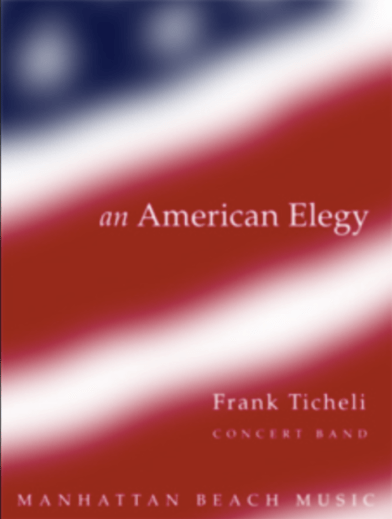
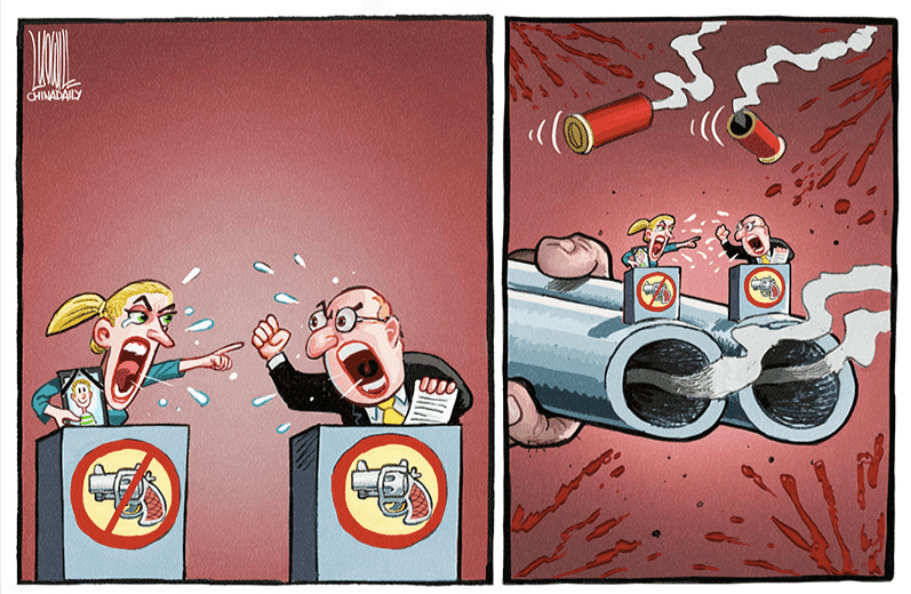
Since the Columbine shooting in 1999, over 215,000 students have been exposed to gun violence in their schools, inducing widespread outrage in America as the debate on gun control raises to a fever pitch. In this past year alone, a walkout was organized by students nationwide in response to the Parkland shooting, and Americans banned together through various social media hashtags, including “#MeNext,” to express their opinions on gun reform. On the opposite side of this argument, members of the NRA (National Rifle Organization) are becoming increasingly vocal both online and at rallies, and many argue that eliminating the right to bear arms would be counterproductive, further endangering unarmed Americans. With both sides of the gun control debate so impassioned, this issue is becoming increasingly polarized. Ironically, more attention is placed on being proven right than on creating change, and fear and outrage emanating from all sides of the debate has resulted in the stifling stalemate that we find ourselves in today.  This stagnancy, however, has one simple solution: hope. And that is exactly the message that Frank Ticheli communicates in his concert band piece entitled “An American Elegy.”

Screen Shot 2018-09-07 at 11.09.47 PM

This piece was written in 2000 in response to the Columbine shooting, and in memory of the victims of the tragedy.  As he explains in the program notes, “An American Elegy” is, “above all, an expression of hope.” Instead of retaliating against the tragedy by attacking the government for lax gun laws, or calling for security guards in schools and for teachers to learn to wield a gun, Ticheli uses music to unite people, and inspire the hope necessary to induce change.

Ticheli was commissioned to write “An American Elegy” following the tragic Columbine shooting, and the piece debuted in a joint performance with students from Columbine High School Band, and the University of Colorado Wind Symphony. This initial performance already illustrates the uniting power of music, and how much more impactful creation is than debate. In fact, Ticheli was able to compose virtually every element of “An American Elegy” in a mere two weeks, spurred on by the gravity of his budding creation. If only politics could operate at that speed.

In terms of the music itself, “An American Elegy” begins with just barely a whisper of the lowest voices in the band. These deep voices continually rise in both pitch and volume, and upper voices soon join in with a countermelody, until it feels that the song explode apart from the sheer noise and energy emanating from the band. A bell toll finally marks the emergence of a new chorale, however, and the piece transitions from this force of uncapped energy into a more meditative main theme. Just as people tend to first react with stunned silence to a tragedy, before more and more voices cry out in outrage and despair, this piece likewise begins with a sort of melancholy feeling, before more and more instruments are added to the composition. Throughout this, however, the initial base line almost exclusively rises in pitch, perhaps representing a sort of hope among the chaos. The bell that marks the transition of the music into a more melodic chorale parallels a funeral bell that unites people in remembrance of the deceased, and the first main theme introduced shortly thereafter is one of the first instances in which virtually all members of the band are working to create one united and cohesive theme.

About halfway through the piece, the meditative and muted series of themes and intertwining lines gives way to a triumphant trumpet countermelody, indicating a renewed sense of purpose to the voices of the piece. Shortly thereafter, however, the listener is faced with a very simple and stripped-down tune between clarinets and saxophones that lacks even the basic melodic line, leaving only a bare harmony in remembrance of the tragedy. In addition to honoring those who passed in the horrific attack at Columbine, this quiet transition highlights the strength of those who endured the attack. Approximately seven minutes into the piece, Ticheli writes an exact quotation of the alma mater of Columbine High School, focusing the attention of the piece on the tragedy of Columbine.

“An American Elegy” concludes with an offstage trumpet solo, followed by one final swelling of noise from band, paralleling the very first crescendo of the piece and marking a last return of the main melody. The music then gradually fades out, leaving only the clarinets and the occasional bell toll exposed, until that too lifts into the silence. After hearing to “An American Elegy,” the listener is almost guaranteed to be reduced to a stunned silence, in awe of the piece’s “poetic strength.”

Screen Shot 2018-09-08 at 12.07.35 PM.png

Even though this piece was composed nearly 20 years ago, Ticheli just this year wrote a letter to the Los Angeles Times about “An American Elegy” and modern gun violence. When Ticheli composed the piece, he expected Columbine to be an outlier, a tragic anomaly. Instead, gun violence in schools has become a common occurrence, which Ticheli blames on current politicians who lack “a humility and wisdom.” Luckily, however, this bold arrogance can be remedied through something as simple as music.

Music, when truly listened to, has the power to impact us profoundly. It can bring about intense emotions, induce reminiscing, and, perhaps most importantly, inspire hope. In creating “An American Elegy,” Frank Ticheli helped to unite a mourning community of people, paying homage to the victims of the shooting while also pushing forwards to the hopeful future. Today, however, when people spend every waking hour arguing about who is right, the noise of our own voices blocks out the magic of the music. In the debate on gun violence, and more broadly in virtually every emotionally or politically charged argument, people often slip down the rabbit hole of debate, forgetting about the problem yet to be solved. So perhaps, rather than adding their own voices to the cacophony of debate, politicians and protestors should give up ten minutes of their time and listen to Ticheli’s “An American Elegy.” If nothing else, the listeners may finally feel hope.

Screen Shot 2018-09-08 at 12.07.08 PM.png